

Chapters
Chapter V: The Gilded Cage Crumbles
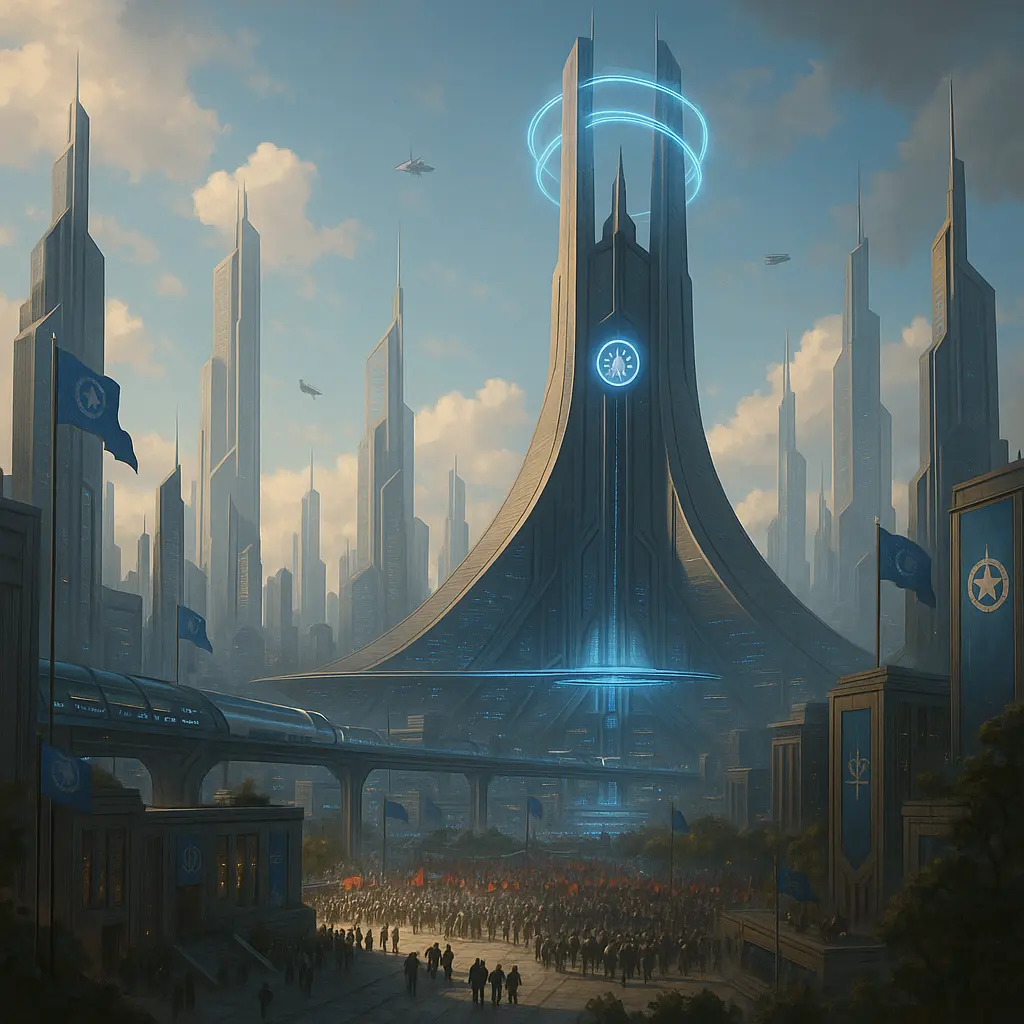
For perhaps fifty years, the Unified Galactic Alliance projected an image of triumphant unity. Its heart, Auralis Prime, became a breathtaking symbol of interstellar cooperation – a planet-spanning city where towers pierced the clouds, adorned with architectural styles drawn from countless worlds, all interconnected by shimmering transit systems and crowned by the grand UGA Council Spire. The Alliance's crowning achievement was the Portal Charter, a complex set of protocols designed to govern the burgeoning network. It established clear zones of control around each system's single portal, levied taxes on transit and resource extraction within those zones, and outlined procedures for access and dispute resolution. To enforce these rules, the Portal Guardians were created – envisioned as an elite, impartial force composed of detachments from all major member factions, patrolling the portal network and ensuring compliance. On paper, it was a marvel of interstellar governance, a framework intended to guide humanity's expansion peacefully.
But the gleaming façade of Auralis Prime hid a growing decay, like rust spreading beneath chrome. The UGA, born from necessity, quickly became entangled in its own complexity. Its bureaucracy swelled, turning swift action into a sluggish crawl through committees and sub-committees. Decisions that should have taken days stretched into months, bogged down by procedural delays and endless debate. This inefficiency became fertile ground for the very factionalism the UGA was meant to transcend. Dominion lobbyists, experts in leveraging perceived threats, relentlessly pushed for military exemptions and special considerations, arguing that Kralon's strength was essential for galactic security. Their influence subtly reshaped UGA directives to favor military readiness over equitable development.
Simultaneously, the tendrils of the Aetherion Syndicate crept into the heart of the administration. Their agents, masters of bribery and information brokering, corrupted officials at multiple levels. Favorable trade rulings, ignored smuggling activities, advance notice of resource surveys – all could be bought for the right price in credits or secrets. They thrived in the grey areas, exploiting every loophole in the Portal Charter, turning the UGA's regulations into just another variable in their profit calculations. The Accord representatives, meanwhile, often found themselves ensnared in protracted ethical debates over the implications of new Ephoran discoveries, inadvertently delaying practical applications while Syndicate spies stole their research data and sold it to the highest bidder, including the Dominion's military labs.
The Aurelian Front, representing worlds that felt the pinch of these power plays most acutely, found their calls for reform consistently stonewalled. Their proposals for more transparent accounting of Astromite taxes or fairer allocation of newly discovered Quantarite deposits were buried in committees dominated by Dominion appointees or sabotaged by Syndicate interference. Disputes over portal usage fees, where powerful core worlds often felt entitled to cheaper access than frontier colonies, festered into bitter resentment. Covert skirmishes, disguised as mining accidents or pirate attacks, began to erupt in contested Astromite fields far from Auralis Prime's oversight. Trust, the essential currency of any alliance, began to evaporate rapidly.
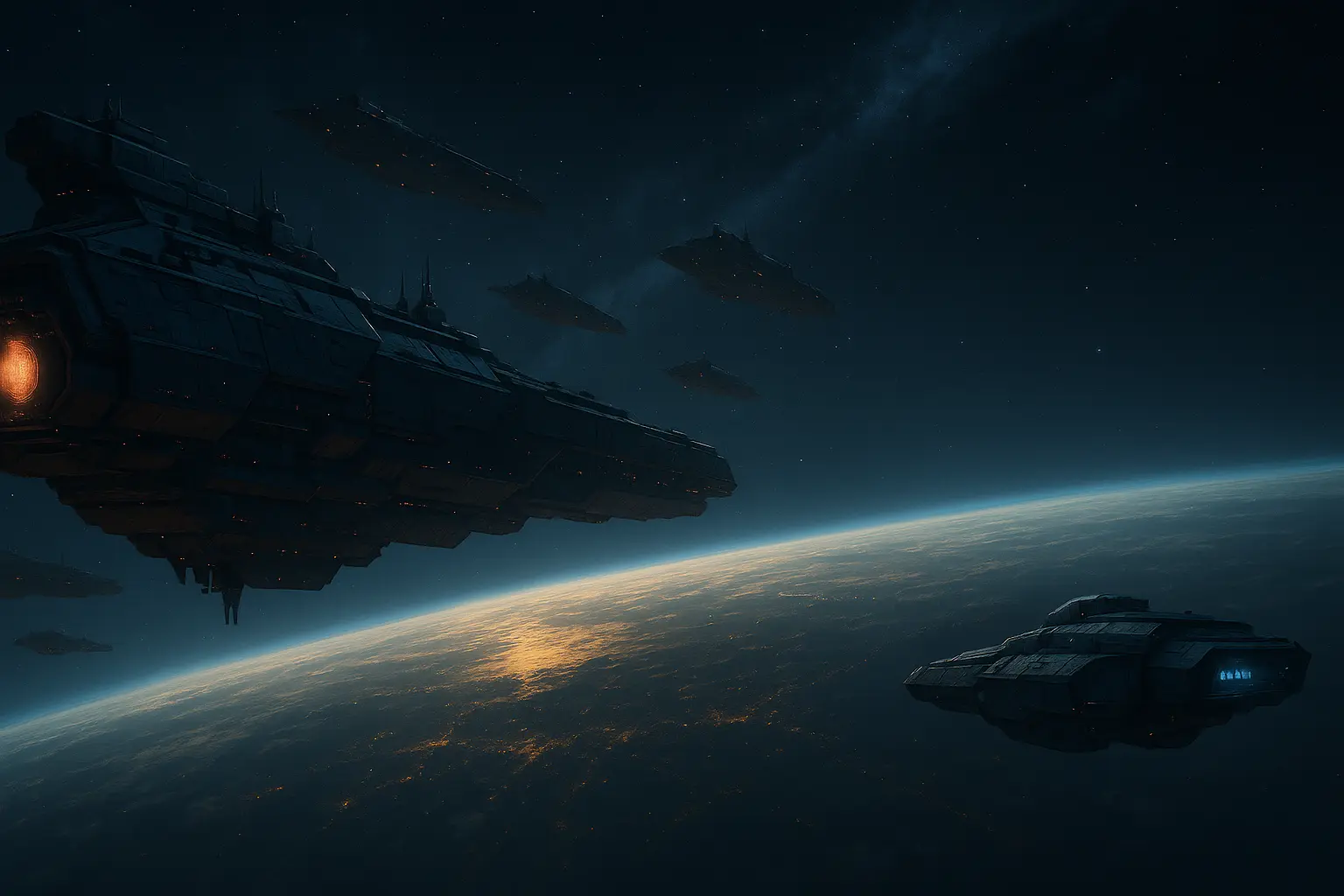
This erosion of faith fatally weakened the UGA's only real enforcement arm. A turning point came with the infamous 'Aldrin Incident' about twenty years before the war began. During a tense border standoff between two mid-tier systems, a Portal Guardian patrol, composed primarily of Dominion-aligned vessels, openly refused direct orders from UGA High Command to de-escalate, citing ambiguous "conflicting regional security directives." Though eventually resolved without bloodshed through frantic back-channel diplomacy, the incident shattered the illusion of the Guardians' impartiality and central authority. Member states, increasingly wary of their neighbors and skeptical of Auralis Prime's ability to enforce its own charter, began accelerating the quiet prioritization of their own regional fleets. Contributions to the Portal Guardians dwindled further. Ships and personnel were recalled under thin pretexts of "internal security needs" or "required fleet readiness exercises." Joint patrols became infrequent, responses to violations slow and ineffective. The Portal Guardians, once envisioned as the impartial sword and shield of the Alliance, became increasingly symbolic, underfunded, and unable to project authority much beyond the core systems. Auralis Prime remained a glittering hub for diplomats, but the real power was shifting back to the factions, who now viewed the UGA less as a governing body and more as a gilded cage to be tolerated, manipulated, or eventually, broken.
Interstellar Empires
A browser-based 4X strategy game set in space. Build your empire, explore new worlds, and dominate the galaxy.


© 2024-2026 Interstellar Empires. By using this website you agree to the Terms of Service.